macos · local · coding agents on your repos, never the cloud
Let a coding agent run wild on your repo —
without trusting it.
drydock runs Claude Code or OpenAI Codex full-throttle on your own repos, on your own Mac — no permission prompts, no babysitting. Each task runs sealed in a throwaway VM, so the agent can't touch your API key, can't reach the open internet, and can't write to anything but a disposable copy. The only thing that ever comes back is a git diff — and nothing reaches your real code until you approve it.
- It never gets your key. Your real API key stays on the host — the agent only ever sees a short-lived, budget-capped token.
- It can't smuggle anything out. The internet is deny-by-default — no exfiltrating your code, no calling home.
- Nothing touches your repo until you say so. You read the diff and approve it before it ever reaches origin.
working alpha · v0.2.0 Single-maintainer, no third-party security audit yet — read the threat model and decide for yourself. Requires macOS 26+ on Apple silicon.
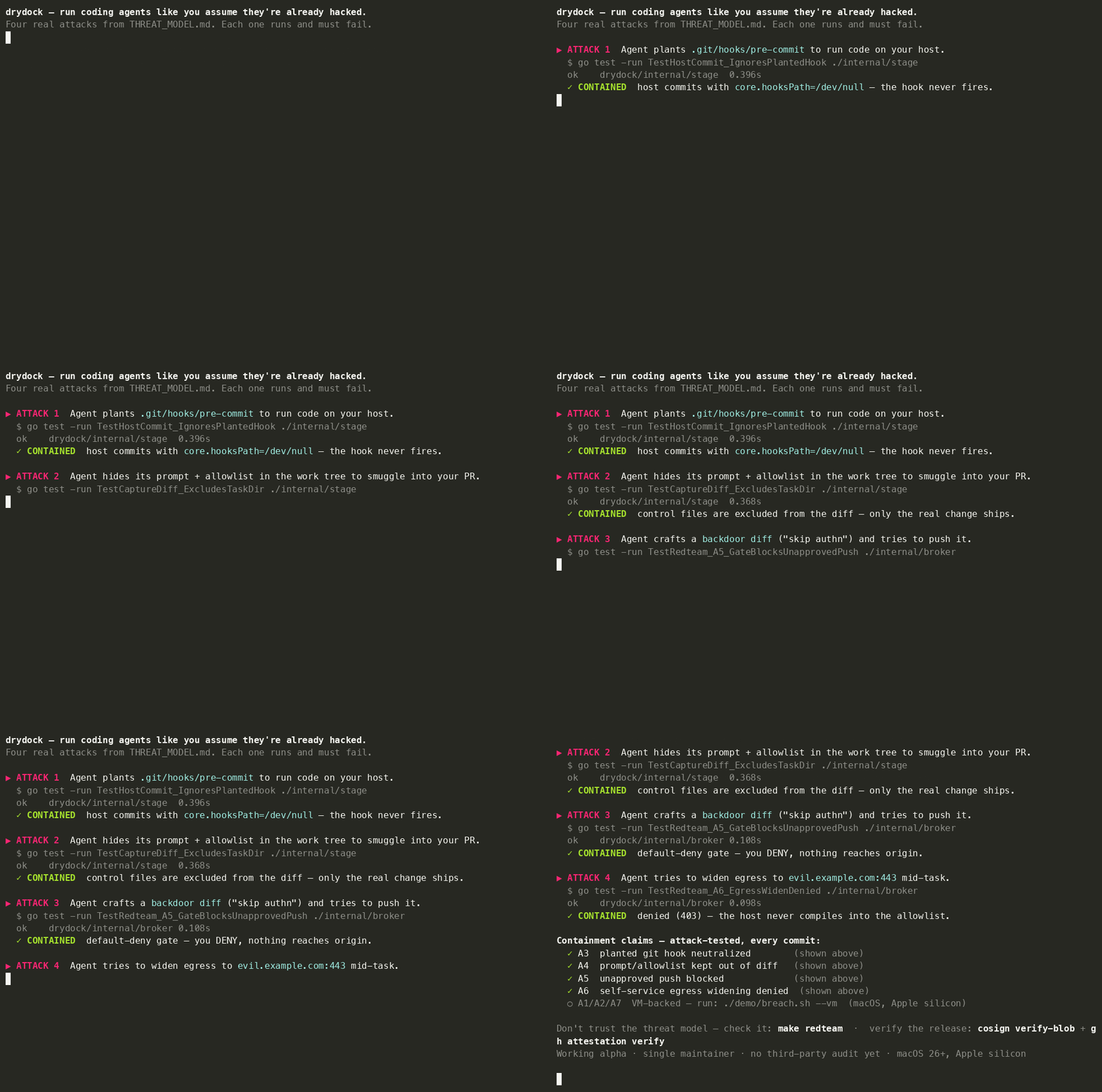
go test red-team case that runs the attack and asserts it fails — reproduce with make redteam, or watch all seven (incl. live VM isolation) via make demo VM=1. See the threat model →Install · macOS · Apple silicon
# install drydock, then one command sets up the rest
brew install sricola/drydock/drydock
drydock setup   # installs container + squid, then init

# set a vendor key — Claude Code and/or OpenAI Codex
export ANTHROPIC_API_KEY=sk-ant-…
# …or skip keys and use a subscription, no API key:
#   drydock auth claude   (anthropic_auth: subscription)
#   drydock auth codex    (openai_auth: subscription)
drydock start